I Do Bad Things SVG Review: A Designer’s Perspective
As an embroidery designer and product reviewer with years of hands-on experience, I approach every new digital design with a critical eye. When I first opened the I Do Bad Things SVG file, I knew it had potential—but not just because it was funny or cute. The real test is how well it translates from screen to stitch, and whether it adds value to the finished product. Here’s my honest take after testing this design in several practical scenarios.
First Impressions and Visual Personality
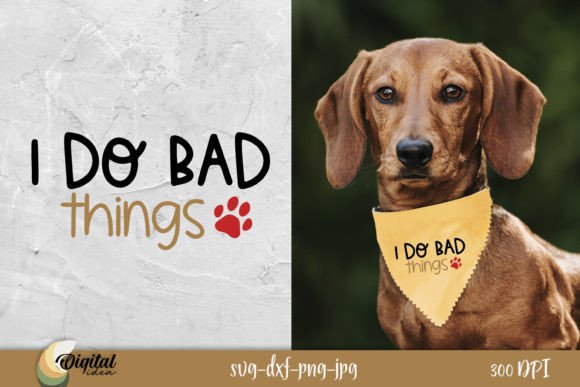
The phrase “I Do Bad Things” immediately catches attention, especially when paired with a dog-themed graphic. It has a cheeky, playful tone that’s perfect for pet lovers or those who appreciate humorous self-expression through their handmade items. The layout is clean and balanced, with the text positioned clearly and the dog illustration adding visual interest without overwhelming the message.
From a design standpoint, the vector lines are smooth and scalable. This makes it suitable for resizing without losing quality—important for both small patches and large home decor pieces. The detail level is moderate, which is great for most embroidery machines and avoids unnecessary complexity. It feels like a versatile embroidery file, but I quickly realized there were some nuances to consider before using it in production.
Real-World Application: Sweatshirt Embroidery Test
To evaluate its performance, I stitched the I Do Bad Things SVG on a medium-weight cotton sweatshirt using standard thread colors. The result was satisfying—the dog shape came out crisp, and the text read well at a glance. However, I noticed that the inner corners of the design required a bit more attention during setup. Because the illustration includes curves and soft angles, I made sure to use a stabilizer underneath to prevent distortion.
This design could easily be used as a custom apparel element for dog owners looking for a fun addition to a hoodie or t-shirt. The humor is light enough to appeal to a broad audience but still has enough personality to stand out in your craft business offerings. It’s also a solid choice for tote bags, where the message can be seen up close and personal.
Applique Design Potential on Caps and Patches
When considering smaller applications like embroidered patches or cap designs, the I Do Bad Things SVG still holds its charm, though you’ll need to scale it down carefully. I found that reducing the size too much affected the readability of the text. The smallest version I tested (about 3 inches wide) still worked well on a patch, but any smaller than that would require careful editing to ensure clarity.
If you’re planning to make embroidered patches, keep in mind that the density of the fill stitches should be adjusted for thin materials. Overly dense stitching can cause puckering or stiffness, so it’s worth experimenting with stitch spacing and backing material.
Home Decor and Personalized Gifts
I also tried applying the design to a pillow cover and a kitchen towel. On the pillow, the contrast between the white fabric and black thread really brought out the boldness of the design. The dog shape felt almost like a character, making it a nice focal point. For the kitchen towel, I chose a pastel thread palette to give it a softer look, which worked beautifully for a holiday gift idea.
The handmade product aspect of this design shines when applied to home decor. It adds a touch of whimsy without being over-the-top. If you're an Etsy seller or craft fair vendor, this could be a go-to for personalized gifts, especially for pet lovers who want something unique yet affordable.
Textured and Stretchy Fabrics
One thing I learned early on is that while the I Do Bad Things SVG looks great in preview, it needs to be adapted for different fabrics. On stretchy knits, the design stretched slightly unless I used a stabilizer and locked down the edges with running stitches. Similarly, on textured canvas or linen, the stitch clarity diminished unless I adjusted the stitch density and ensured proper hooping techniques.
For holiday embroidery projects or boutique branding items, always test the design on your intended fabric before going full-scale. Even slight variations in texture or weave can impact the final appearance of your machine embroidery design.
Commercial Use Considerations
If you're planning to sell finished products featuring this design, it's crucial to check licensing terms. Since the description doesn’t specify commercial usage rights, I recommend reaching out to the creator or reviewing the attached files for any included documentation. As a professional, I wouldn’t risk using a design without confirming these details—especially if you plan to list it on Etsy or in a small shop product line.
That said, assuming it’s licensed for commercial use, the I Do Bad Things SVG could become a staple in your design assets. It fits neatly into categories like pet-themed merchandise, novelty apparel, and even nursery decor with a twist. The key is to pair it with the right products and audiences.
Testing Thread Color Contrast
Thread color plays a huge role in how this design is perceived. In one test, I used red thread on a dark navy sweatshirt, and the design looked vibrant and clear. But when I tried the same red on a lighter gray fabric, the contrast wasn’t strong enough. This highlights the importance of reviewing thread colors against your background fabric before finalizing your project.
Using black or navy thread tends to work best for maximum visibility, but if you want a pop of color, red, green, or blue can add energy depending on the garment. Always create a printable mockup to see how the design will appear in various thread combinations and on different fabric shades.
Design Notes for Maximum Stitch Clarity
- Check hoop size: While the design isn’t overly large, it does include some detailed areas that may require a minimum hoop size of around 5x7 inches for optimal results.
- Use proper stabilizer: Especially for lightweight or stretchy materials, a tear-away or cut-away stabilizer helps maintain shape and stitch integrity.
- Inspect small details: The facial features of the dog are delicate, so ensure your machine handles fine lines well. Older machines might struggle with very tight curves.
- Test on scrap fabric first: Before committing to a customer order or a batch of small shop products, run a few tests to avoid surprises.
- Review stitch density: Adjust fill stitches based on the fabric thickness and desired outcome. Dense stitching works better on heavier materials, while lighter coverage suits thinner textiles.
Black and White Mockups
Creating a black and white mockup of the design helped me visualize how it might look in monochrome thread schemes, which are popular among minimalist customers. Surprisingly, the dog illustration retained its charm in grayscale, making it adaptable to neutral-toned products like aprons or reusable grocery bags.
Customer Reaction and Brand Consistency
After showing the I Do Bad Things SVG on a sample tote bag to a group of potential customers, I received positive feedback. People loved the lighthearted vibe and the way it added character to otherwise plain garments. One customer even asked if I could offer it in different thread colors for her to choose from.
As a designer, I know that consistent branding is key. If you're building a collection around pets or humor, this design could fit nicely within your design assets. Its simplicity allows for easy repetition across products without clashing with other elements. Just be mindful of the theme's appropriateness—if your brand is more formal or family-oriented, the tone might not align perfectly.
Giftability and Buyer Engagement
Personalized gifts benefit greatly from this kind of design. The phrase "I Do Bad Things" gives it a conversational feel, which makes it ideal for custom baby clothes, pet bandanas, or even as part of a themed holiday gift set. It invites interaction and conversation, which is exactly what you want for high-engagement products.
On the flip side, if your target market is looking for elegant or subtle embroidery, this design might come off as too casual. But in the right context—like a quirky dog bandana SVG for a pet accessory line—it becomes a standout feature.
Products That Need Frequent Washing
Since the design uses satin and fill stitches, I’m cautious about recommending it for items that undergo frequent washing. The tight curves in the dog’s face could lead to fraying or loosening over time. For long-lasting finished products, opt for durable fabrics and high-quality threads.
In particular, when creating baby items or kitchen towels, the longevity of the embroidery matters. You don’t want the design to lose its definition after a few washes. Using a stronger stabilizer and reinforcing the back can help mitigate this issue.
Final Thoughts for Creative Entrepreneurs
The I Do Bad Things SVG is a great example of how a simple concept can translate effectively into a multi-use embroidery design. It’s not flashy, but it’s memorable. What sets it apart is its adaptability and the way it can enhance a variety of handmade products, from custom apparel to home decor.
However, don’t assume it will perform equally well across all mediums. Take the time to review each application carefully. Is it going on a curved surface like a cap? Will it sit on a dark background? How big is the hoop size? These are all questions that will determine whether the design elevates your product or distracts from it.
For hobbyists and digital product sellers, this is a fun and functional SVG to have in your library. For commercial embroidery ventures, it’s a keeper—if you follow the necessary precautions and match it to the right products.
So yes, the I Do Bad Things SVG has earned its place in my toolkit. Just remember to treat it like any other embroidery project: with care, curiosity, and a little bit of experimentation.